
Why Headaches Start at the Base of the Skull
Understanding Occipital Headaches and How the Neck Can Be the Hidden Cause
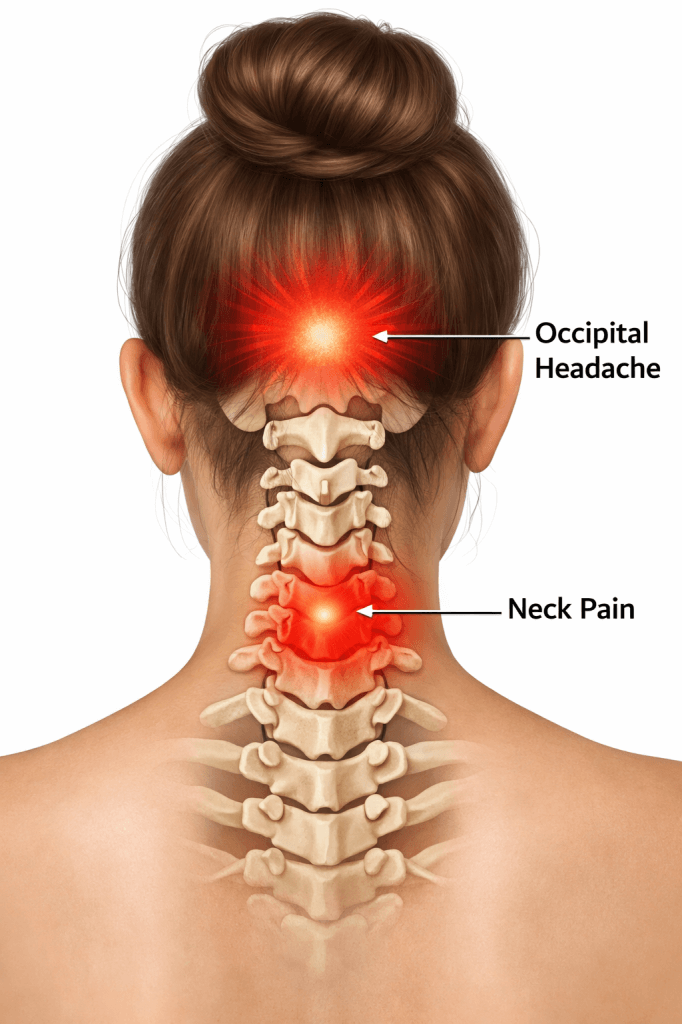
Base of Skull Headaches
One of the most common things patients say when they come into the office is:
“My headache always seems to start right at the base of my skull.”
If that sounds familiar, you’re not alone. Many people experience headaches that begin in the back of the head where the neck meets the skull. These are often referred to as base of skull headaches or occipital headaches.
What surprises many people is that these headaches are frequently not actually coming from the head at all. In many cases, they originate from stress and irritation in the neck.
These types of headaches are commonly called cervicogenic headaches, which simply means headaches that start in the cervical spine (the neck).
At Green Chiropractic in West Omaha, this pattern is something we see regularly in patients dealing with chronic headaches.
Where the Pain at the Base of the Skull Comes From
The base of the skull is a busy area anatomically. Several important structures come together there, including:
• the upper cervical vertebrae
• small stabilizing muscles
• nerves that travel into the scalp
• joints connecting the head and neck
These structures work together to allow the head to move while keeping it balanced on top of the spine.
But they are also very sensitive to mechanical stress.
When the joints or muscles in this area become irritated, pain signals can travel upward into the head.
That’s why headaches that originate in the neck are often felt in the back of the head, temples, or even behind the eyes.
The Role of the Suboccipital Muscles
Right under the base of the skull is a group of small muscles called the suboccipital muscles.
These muscles help control small movements of the head and keep the head balanced on the spine.
Although they are small, they do a lot of work—especially when posture isn’t ideal.
When the head moves forward in front of the shoulders, these muscles have to work constantly to hold the head upright.
Over time this can lead to:
• muscle fatigue
• tension
• trigger points
• nerve irritation
When these muscles become irritated, they can trigger headaches that begin at the base of the skull and spread upward.
Why Modern Posture Contributes to These Headaches
Many base of skull headaches are related to forward head posture.
Forward head posture is extremely common today because of daily activities like:
• looking down at phones
• working on laptops
• long hours at desks
• driving for extended periods
When the head shifts forward even a small amount, the muscles and joints in the neck must support significantly more weight.
The further the head moves forward, the greater the stress placed on the neck.
Over time this increased load can irritate the joints and muscles near the base of the skull, eventually triggering headaches.
What Occipital Headaches Feel Like
Headaches that originate from the neck often have recognizable patterns.
Common symptoms include:
• pain at the base of the skull
• headaches that move toward the top of the head
• pain that travels into the temples or behind the eyes
• stiffness in the neck
• headaches triggered by certain neck movements
Many people also report that the pain feels like pressure or tightness rather than throbbing.
These headaches may start gradually and build throughout the day, especially after long periods of sitting or computer work.
Why These Headaches Often Get Worse During the Day
A pattern many patients notice is that their headaches feel manageable in the morning but worsen later in the day.
This usually happens because the neck is gradually exposed to hours of mechanical stress.
For example:
• sitting at a desk with the head forward
• looking down at a phone repeatedly
• driving with the head pushed forward
Over time the muscles at the base of the skull become increasingly fatigued.
Eventually they may tighten or spasm, triggering a headache.
The Role of the Upper Cervical Joints
The joints in the upper neck play a major role in head movement.
These joints allow the head to rotate, tilt, and nod.
When posture places abnormal stress on these joints, they can become irritated or restricted.
Joint irritation in the upper cervical spine can contribute to:
• inflammation
• muscle guarding
• nerve sensitivity
Because nerves in this area connect to the head, irritation here can easily produce referred pain into the skull.
Why These Headaches Are Often Misdiagnosed
Base of skull headaches are sometimes mistaken for other types of headaches, including:
• tension headaches
• migraines
• sinus headaches
While those conditions can certainly occur, headaches originating from the neck often require a different approach because the source of irritation is mechanical rather than chemical.
If the joints or muscles in the neck continue to experience abnormal stress, the headaches may continue returning.
Signs Your Headache May Be Coming From the Neck
Although every case is different, certain signs often suggest the neck may be involved.
These include:
• headaches beginning in the back of the head
• neck stiffness or tightness
• headaches triggered by posture or desk work
• pain that spreads from the neck toward the head
• headaches that improve when the neck is supported or rested
These patterns are commonly seen with cervicogenic headaches.
Addressing the Mechanical Cause
When headaches originate from the neck, addressing the mechanical stress affecting the cervical spine can be an important step.
This often involves looking at factors such as:
• posture
• spinal alignment
• joint mobility
• muscle balance
Improving these factors may help reduce the irritation in the neck that contributes to recurring headaches.
Headache Relief for Patients in West Omaha
At Green Chiropractic in West Omaha, many patients come in frustrated by headaches that seem to start at the base of their skull.
Once we evaluate the spine and posture, it often becomes clear that the neck is under more stress than it should be.
By identifying and addressing the structural stress affecting the cervical spine, many patients are able to reduce the frequency and intensity of their headaches.
Understanding the connection between the neck and head is often the first step toward finding a lasting solution.

The neck plays a critical role in headaches
FAQ: Base of Skull Headaches
Why does my headache start at the base of my skull?
Headaches beginning at the base of the skull are often caused by irritation of muscles, joints, or nerves in the upper cervical spine.
What are occipital headaches?
Occipital headaches involve pain in the back of the head and are frequently related to tension or irritation near the base of the skull.
Can neck muscles cause headaches?
Yes. Tight or irritated neck muscles, particularly the suboccipital muscles, can trigger headaches that spread from the back of the head.
What is a cervicogenic headache?
A cervicogenic headache is a headache that originates from the neck rather than the head itself.